

Upper blepharoplasty is one of the most requested facial procedures, and the reason is usually the same: heavy, hooded eyelids that make a person look permanently tired regardless of how they feel. Surgery delivers a lasting correction that no skincare routine can replicate. Yet patients often arrive at consultations with the same question: will this procedure also reduce the fine lines and creases on my eyelids, or will it only address the excess skin?
The procedure removes excess skin and fat from the upper lid. Fine surface wrinkles are a different problem entirely, one it doesn't directly target. Dr. Omotara Sulyman-Scott, a board-certified facial plastic surgeon at That Face in Chicago, helps patients understand this difference before committing to a plan. Read on to see what blepharoplasty can and can't do, and where other treatments may fill the gap.
What Upper Eyelid Surgery Actually Fixes
Over time, eyelid skin loses collagen and elasticity, causing it to sag and fold over the lash line. Fat compartments can shift as well, adding puffiness to the already heavy appearance. Candidates for upper eyelid surgery typically present with one or more of the following:
- Drooping skin that folds over the lash line
- Hooded lids that partially conceal the upper lid crease
- Fat pockets creating visible puffiness above the eye
- Peripheral vision blocked by sagging skin
- A persistent heaviness that reads as tired or sad, regardless of how rested a person feels
Any wrinkled skin that is removed takes those lines with it. Patients with significant hooding often find the post-surgical lid looks cleaner than they anticipated, since the deepest folds and creases disappear with the excess tissue.
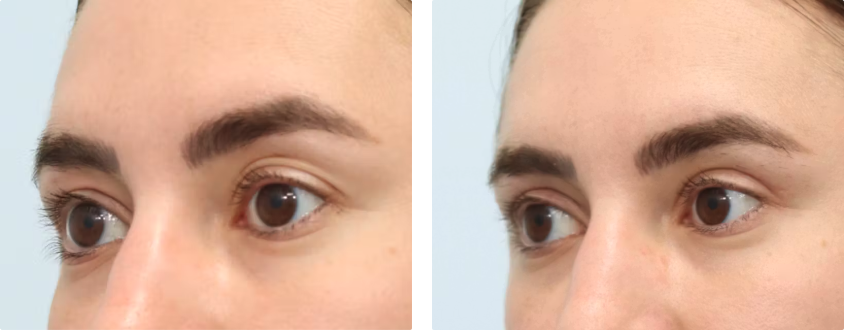
*Real Patient Results - 1 month after Upper Blepharoplasty
Fine Lines and Heavy Skin Are Different Problems
Fine eyelid wrinkles have different causes than skin laxity. Eyelid skin is the thinnest on the body, making it particularly vulnerable to UV damage and collagen loss over time. Repeated muscle movement from squinting and blinking etches lines into that thin skin over the years. These are texture concerns that surgery doesn't treat.
Blepharoplasty removes skin. The texture and tone of what remains reflect years of UV damage and muscle movement, and the procedure doesn't change that. Subtle surface lines on the lid persist regardless of how much excess tissue is removed. Patients focused on heavy, drooping lids rarely consider this an issue. Those who are also hoping for a smoother eyelid surface generally find they need additional treatments to get there.
What to Add If Wrinkles Are Still a Concern
Dr. Sulyman-Scott often works with patients dealing with both excess skin and fine lines. In those cases, she builds a plan that sequences the surgery and any complementary skin work around a single recovery. Common additions include:
- BOTOX®: Reduces the repetitive muscle contractions that generate dynamic lines around the eyes and brows.
- Laser skin treatment: Stimulates collagen and smooths fine lines by working directly on the skin's surface.
- Microneedling: Triggers the skin's natural repair process to gradually improve eyelid skin texture.
- Chemical peels: Resurface and refine superficial lines with a controlled, lower-intensity approach.
Many patients tackle both in a single treatment plan, covering structure and skin texture in one recovery.
See What's Possible with Dr. Omotara Sulyman-Scot
For a procedure like blepharoplasty, a realistic outcome starts with a realistic conversation. At That Face, Dr. Sulyman-Scott identifies the drivers of each concern before settling on a plan. That's why her patients describe their outcomes as looking like themselves, only more rested. If you're considering upper blepharoplasty in Chicago, schedule a consultation and take the first step toward eyes that genuinely reflect how you feel.
This information is provided for educational purposes only and does not replace a consultation with a board-certified plastic surgeon. Outcomes, risks, and suitability vary from patient to patient.